Substrate and Planting for Gecko Condo
Gecko condo is planted! I need to cut some more cork pieces, and it needs to sit for a month so the plants can establish themselves before the geckos re-enact Animal House and tear the whole place up when I add them, but otherwise there is only step remaining and it is purely cosmetic:
1. Build supports and bottom cabinet (completed except some paint)
2. Build the 3 tanks that make up the condo
3. Line up and drill the holes for securing the tanks to the supports.
4. Build the skirts for between levels.
5. Build naturalistic backgrounds and substrate using Great Stuff foam and natural materials
6. Building an automated misting/watering system
7. Lighting (optional for the moment since what I am working with, may change because of plants)
8. Planting
9. 3D print bolt covers, nut casings and drawer pulls to hide hardware.
So here we go!
Getting vivariums set up for planting is slightly more complicated than most people imagine, but that does not mean it is difficult. Though it is a practice that some people have used, you really shouldn't just dump organic soil in the vivarium and call it a day. While plants will of course grow if you do so, it is going to cause a lot issues with drainage, the soil will wear out faster than you would like, and will you probably introduce a lot of micro-organisms that you really don't want into the vivarium which is bad for the reptiles.
Before getting into the details it should be noted that a lot of these substrate materials can be acquired at hydroponics stores. If you have time, need a lot, or just want to source the materials yourself you can probably save some money by getting them from somewhere other than a reptile or dart frog site.
Vivarium substrate should always be set up in 3 layers. The first of which should be a drainage layer which will help wick water to the plants while preventing rotting. You can use rocks or pebbles for this buy I prefer to use expanded clay balls which is exponentially lighter. There are a few brands of this material but one of the more cost effective is a brand called Hydroton which you can get in 50 liter bags.
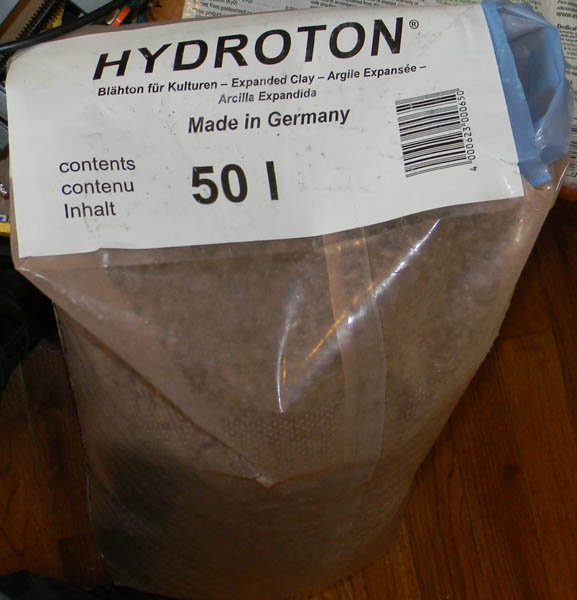
There is a newer product made out of expanded recycled glass which I have samples of but haven't had a chance to try out yet. Its roughly the same cost as the expanded clay, but weighs slightly less and has no dust. You can find it under the brand Growstone hydroponic medium ( http://www.growstone.com )
Once you have your drainage medium of choice you should add 1.5-2 inches worth of it to the bottom of your set up. If you have drains you want to make sure they are covered by this drainage layer. If you are going to have a very high humidity vivarium you might want to edge on the higher volume for this layer. If the water level squeeks into the top substrate layer you will definitely risk lots of mold growth and rotting.
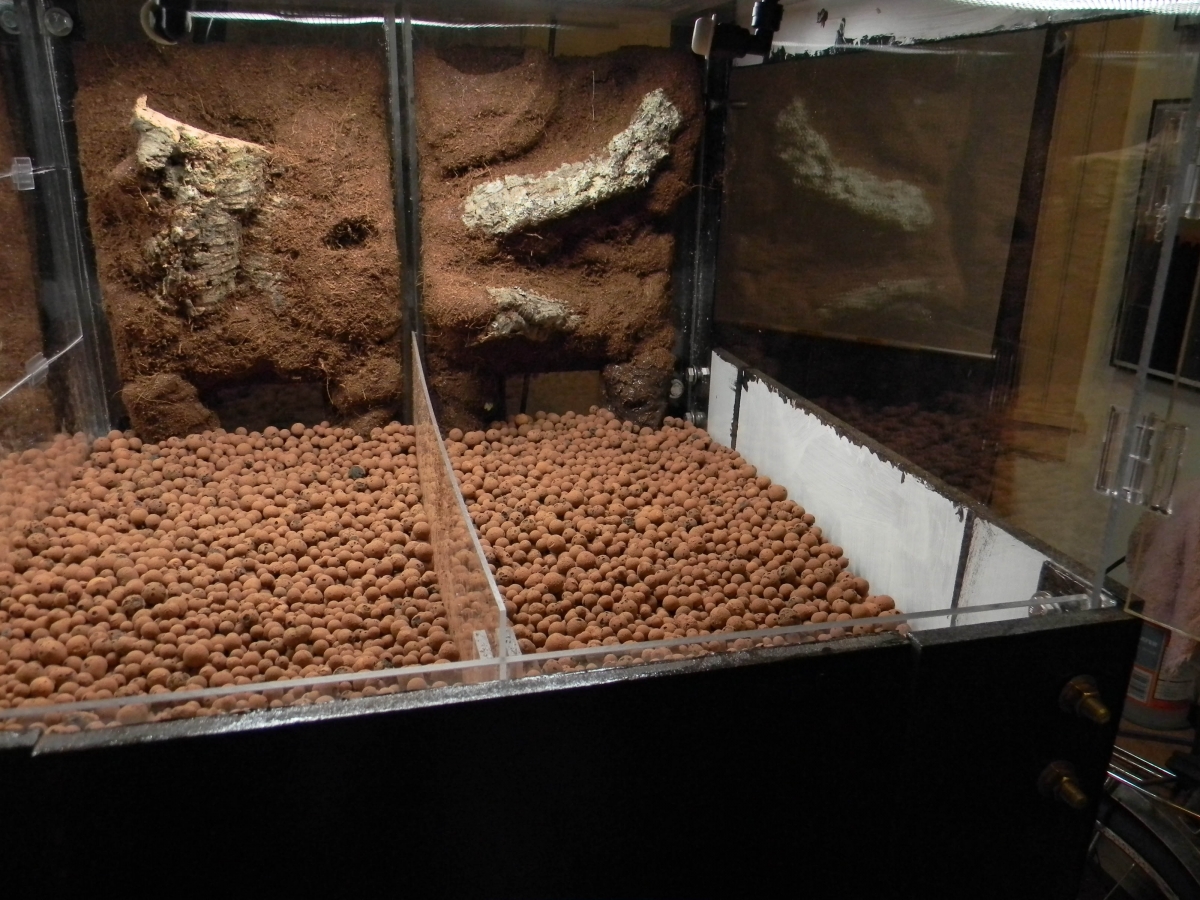
It took 100 liters of Hydroton to adequately cover the bottom of all three levels of Gecko Condo.
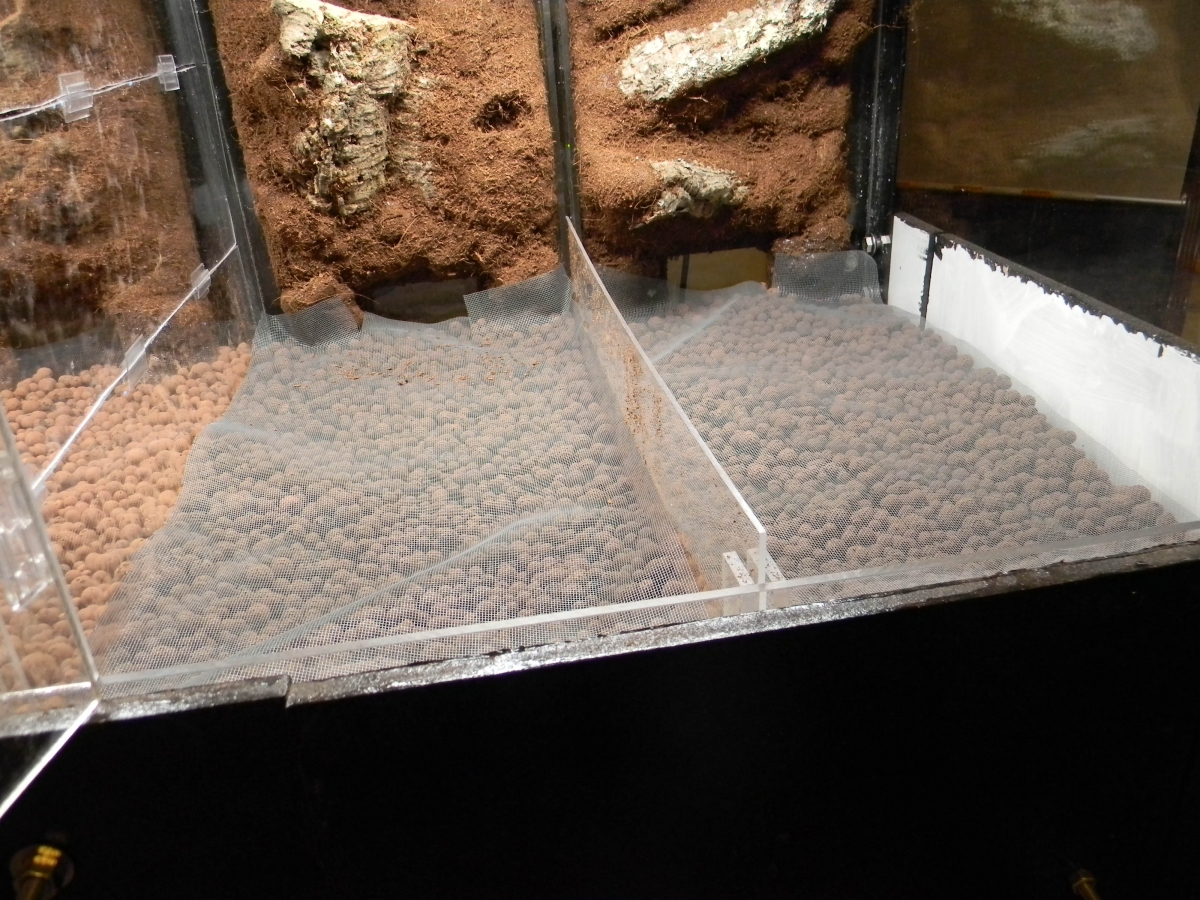
The next layer is simply a piece of nylon window screen cut to size to cover the bottom of the vivarium. The point of this layer is just to keep the top layer from filtering into the drainage later.
The final layer should be at least 2 inches deep. You can buy it pre-mixed from a lot of hydroponics places, dart frog sites and herp sites but you can also put it together yourself. Normally I would do this, but I was feeling lazy and just ordered 22 gallons of the stuff with my plants. The mix I got comes from http://www.neherpetoculture.com. It includes organic charcoal, coir (the same coconut husk used in the backgrounds), sphagnum moss, tree fern fiber and orchid bark. This promotes plant growth, a long lasting substrate, will not irritate the animals when they dig, and will support microfauna.
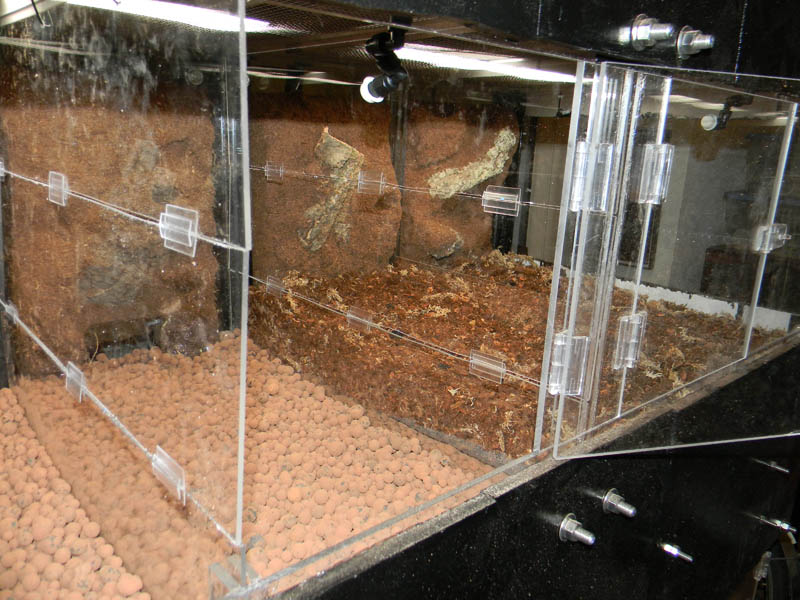
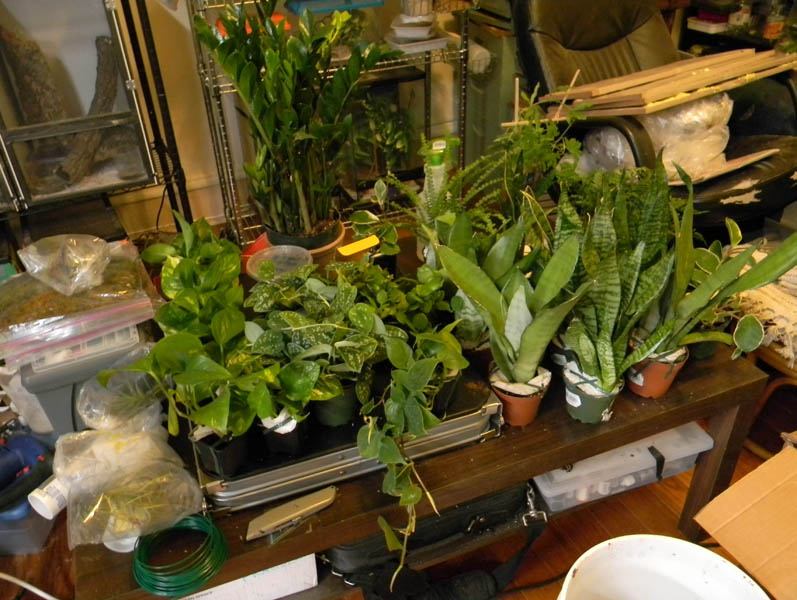
With these 3 layers in all that is left to do is plant! I got about 40 plants in total, most of which are just fine for medium and large size geckos.The names of the plants in each partition follow the pictures of each of the tanks below. There are a couple ferns, some tillandsias, moss, and other plants. There is also some magnolia leaf litter on the top.
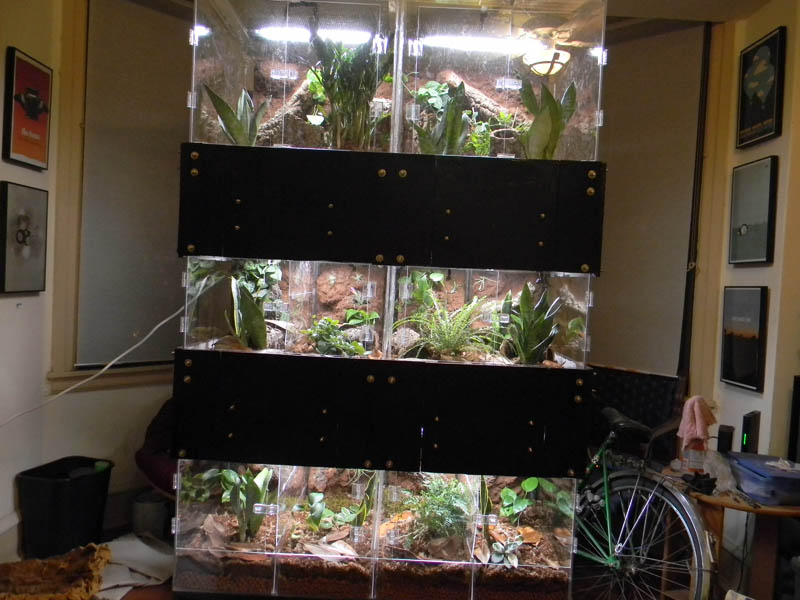
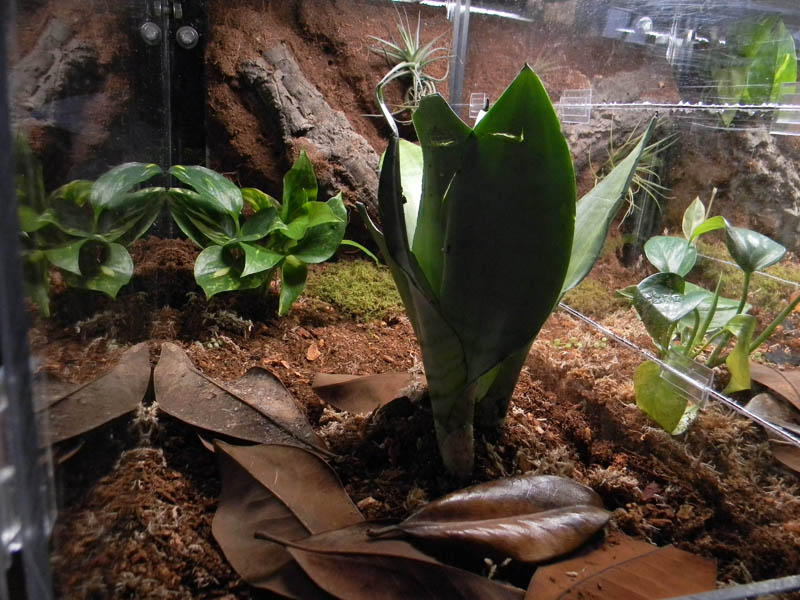
(wall) tillandsia
(back) , moss
(front) pothos, "Laurentii" Sansevieria trifasciata
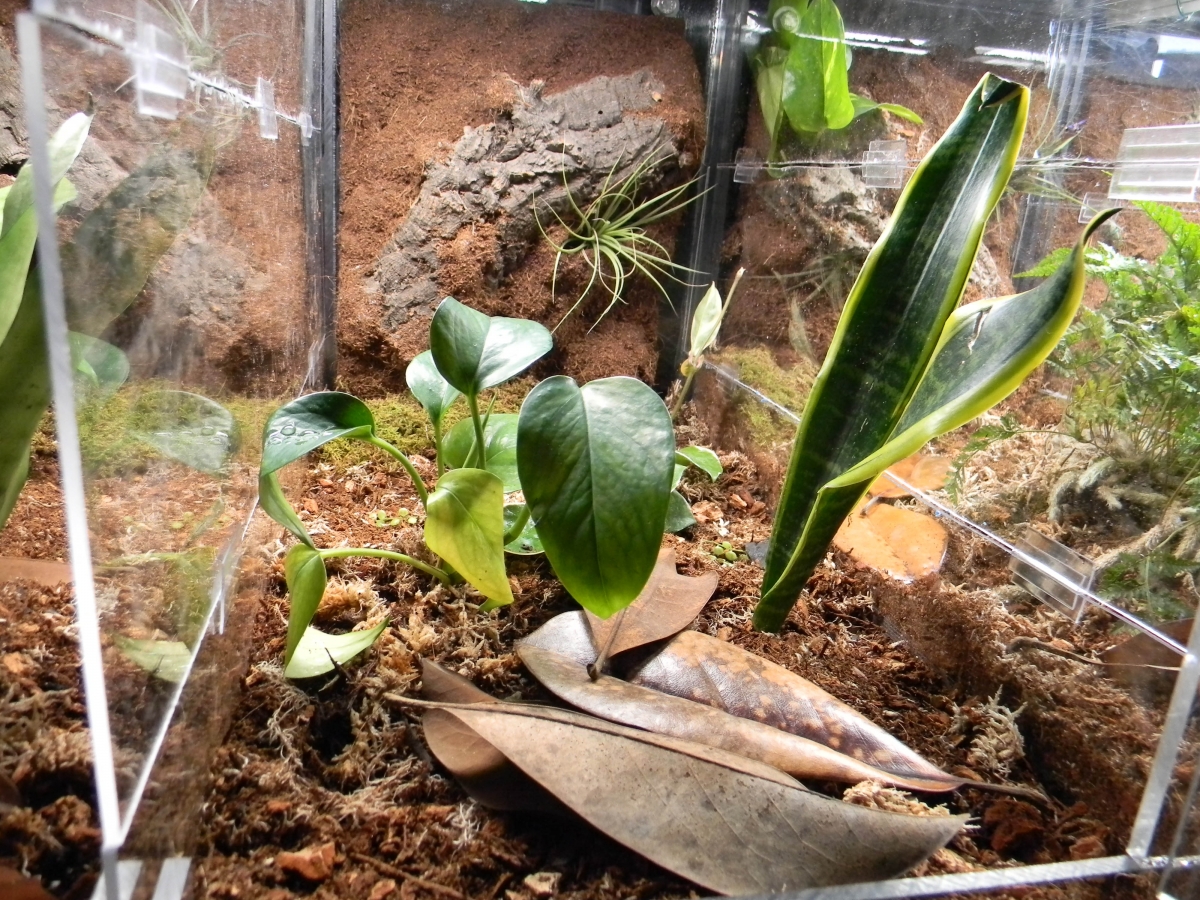
(wall) tillandsia
(back) Hoya carnosa variegata, moss
(front) pothos, "Black gold" Sansevieria trifasciata
(wall) 2 tillandsia
(back) pothos, moss
(front) Hoya carnosa variegata, "Black gold" Sansevieria trifasciata
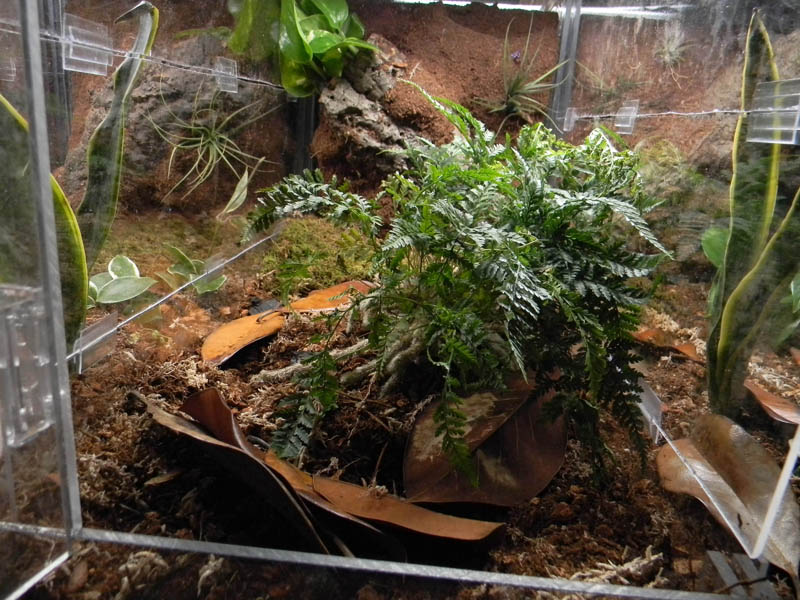
(wall) tillandsia, pothos
(back) moss
(front) Rabbits foot fern
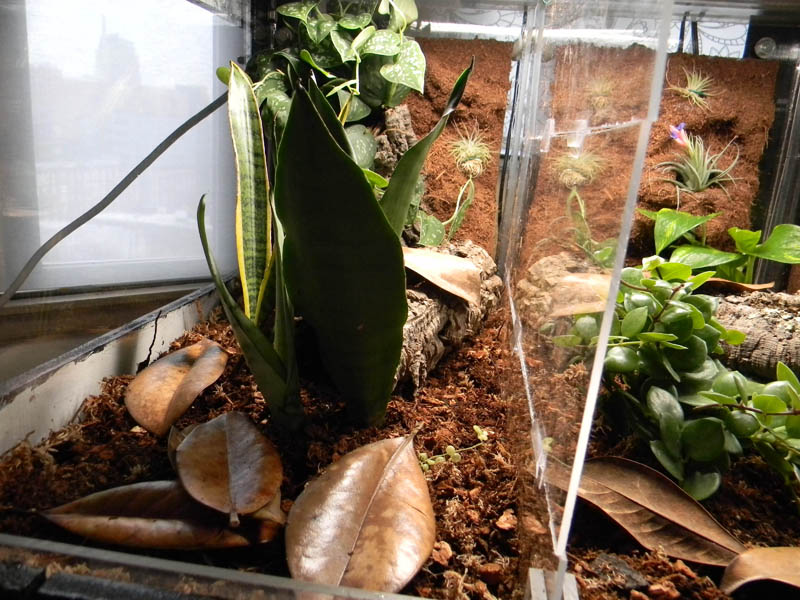
(wall) tillandsia, satin pothos
(back) moss
(front) "Black gold" Sansevieria trifasciata
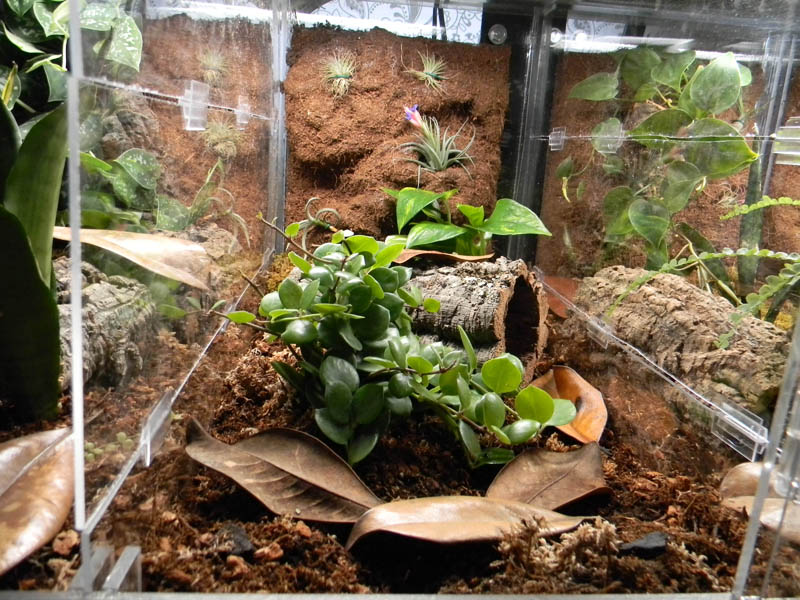
(wall) 3 tillandsi
(back) moss, pothos
(front) aeschynanthus radicans
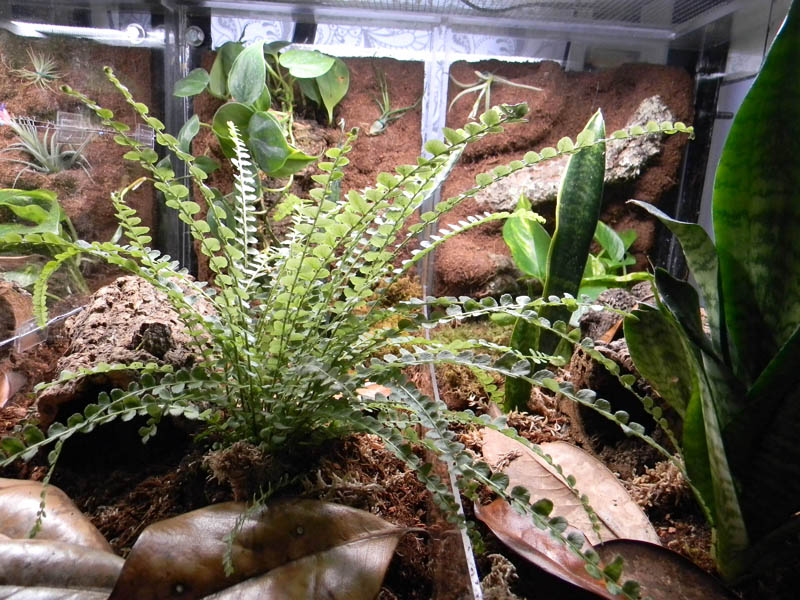
(wall) 3 tillandsii, pothos, 2 moss
(back) moss, pothos
(front) nephrolepis cordifolia (lemon butter fern), "Laurentii" and "black gold" Sansevieria trifasciata
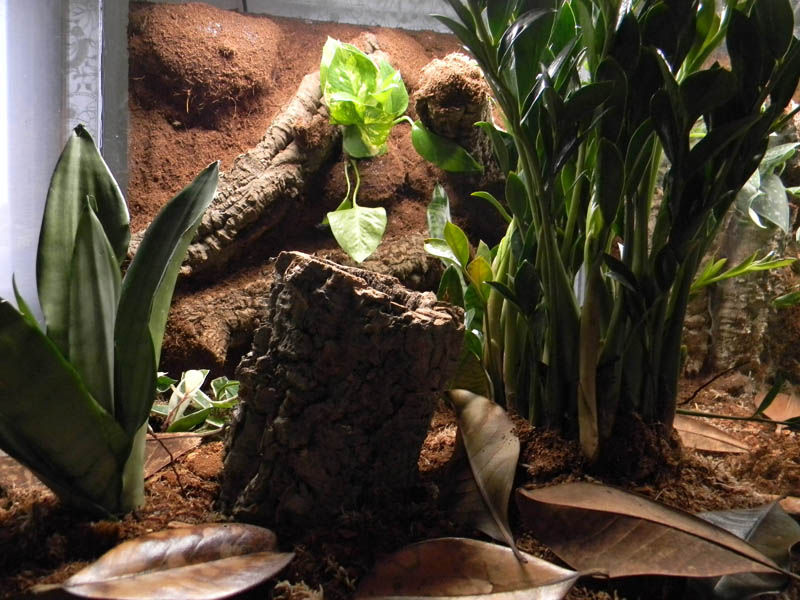
(wall) pothos
(back) Hoya carnosa variegata
(front) "Moon shine" Sansevieria trifasciata, zamioculcas zamiifolia
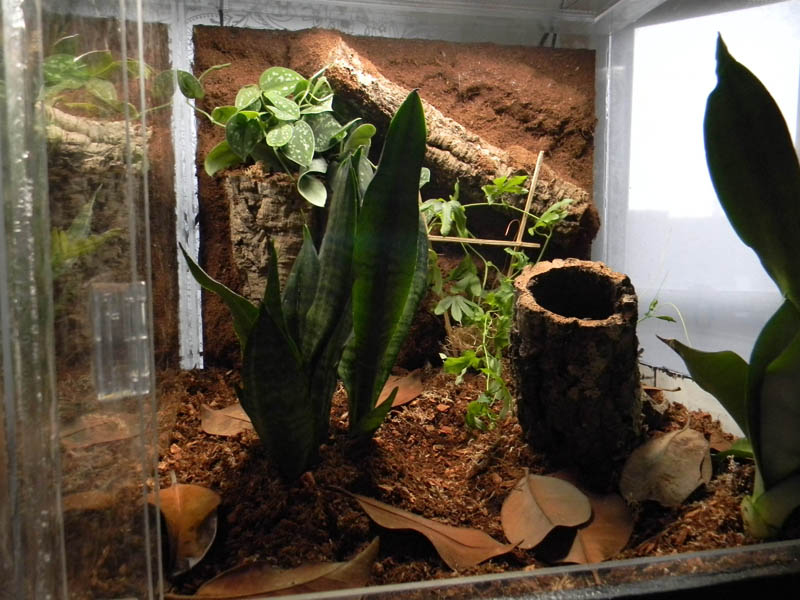
(wall) satin pothos
(back) passiflora caerulea, "Laurentii" Sansevieria trifasciata
(front) "Moon shine" Sansevieria trifasciata
there are also clippings of peperomia prostrata in most of the tanks but they are small and don't really show up in the pics.
Now that Gecko Condo has plants they of course need to be watered. Good thing we have a misting system already in place! Here is a 2 minute video of the misting system in action:
It is set to run 3 times a day for 30 seconds each. All of the sprayings are during or very near lights out so it can dry out some during the day and so it is wet when the geckos will be active. The system has 12 nozzles hooked up and is powerful enough that I could add up to 8 more before needing a more powerful pump.